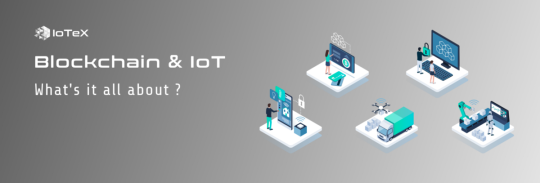

How Blockchain is changing IoT
- Securing data better: The first one is indeed the concept of storing data securely. We know that blockchain protocols are not designed to heavily store data (they are indeed ledgers, not databases), but they can provide “control points” to monitor data access (Outlier Ventures, 2018).
- Creating the right incentive structure: A blockchain can create the right incentive structure to share IoT data, which is something we are currently missing. Cross-sectional data have been proved to have the most disruptive impact when applied across different industries, but the problem of how and why sharing data in the first place remains. Blockchain (and tokenization) can be used to solve this economic dilemma, and once data are shared can be more easily validated, authenticated and secured.
- Creating a network of computers: Distributing the workload and implementing parallel computing tasks is something it is usually attributed to new AI or High-Performance Computing (HPC) applications, but a blockchain would be essential in this development for authenticating and validating the single nodes of those networks. Some companies that are working on this problem are Golem, iExec, Onai, Hadron, Hypernet, DeepBrain Chain, etc.
IoT Challenges
- Physical device attacks (unauthorized device control).
- Software attacks (malware such as viruses or worms).
- Network attacks (Denial of Service assaults, wireless vulnerability exploits).
- Encryption attacks (brute-force password cracking, “Man In the Middle” attacks).
Enter Blockchain
- Analytical model tracking: Allow the system to record metadata and results about logic executed at the edge of the network for the purposes of regulatory compliance, and create an immutable history of why certain “decisions” were made during IoT processing.
- Secure software updates: The ability to publish software updates as a URL on the blockchain, along with a cryptographic hash of the update which can be validated by blockchain-connected IoT devices during the process.
- Payments and micropayments: Automated payments to business network participants based on sensor data (indicating, for example, service completion or product delivery), as well as micropayments between devices themselves in certain networks for functions and capabilities — all without human involvement.

- Status – When you’re collaborating in large eco-systems of partners who deliver product, process, or code, you need to know what was delivered and when. In connected cars, which makes up thousands of suppliers of hardware and software, you need to share real-time information on the status of things as they move through the distributed system.
- Accounting – Knowing once an item has been received or an action taken, it’s posted to the blockchain. Recording transactions through blockchain virtually eliminates human error and protects the data from possible tampering. Keep in mind that records are verified every single time they are passed on from one blockchain node to the next. In addition to the guaranteed accuracy of your records, such a process will also leave a highly traceable audit trail.
- Verify – Falsified inspection certificates, substandard materials, safety hazards, these are some of the challenges faced by multinationals who have materials sourced from different suppliers and producers. IoT Blockchain Services could ensure the original inspection certificates are not false and enable approval through consensus. Blockchain can also provide accurate ‘birth to death’ of a raw materials (copper, steel, aluminum) in the supply chain, which can make the task of finding substandard products much easier.
- Execute – Knowing once an item has been received or an action taken, it’s posted to the blockchain and we use business process automation to execute a Smart Contract. A typical blockchain comprises a digital and distributed ledger for monetary transactions but what if we used asset data from an event to confirm transactions between parties and automate payment. That’s where smart contracts come in.
這將會是真正的民主法治,或者是真正的極權?
-
But wait, there is a missing piece. Exactly! You can’t start a revolution if there isn’t a regime to overthrow. In a fully decentralized world, where justice is executed by robots, evaluation is done by artificial intelligence and every piece of evidence is stored in the Blockchain, there is no way to evade the rules of this system.
So you better be a good sheep.

“We live in a society exquisitely dependent on science and technology, in which hardly anyone knows anything about science and technology.”
─ Carl Sagan, American astronomer and popular science writer (1934 - 1996)